UX design didn’t begin with Figma, mobile apps, or even the web. Long before “UX designer” became a job title, engineers, researchers, and designers were already asking a basic question:
How can technology become easier for people to understand and use?
The tools have changed dramatically since then, but that question is still at the centre of UX design.
Before UX Had a Name
In the early days of computing, computers were built mainly for specialists. Using one often meant learning commands, understanding technical limitations, and adapting yourself to the machine.
As computers became more widely used, researchers started paying more attention to the relationship between people and technology. This helped establish Human-Computer Interaction, or HCI, as an important field of research.
Instead of looking only at what a computer could do, HCI looked at how people interacted with it. Could they understand what was happening? Could they complete a task without unnecessary difficulty? What caused mistakes? How could the system communicate more clearly?
These questions would later become familiar territory for UX designers.
Interfaces Become Visual
The shift from command-line interfaces to graphical interfaces changed the way ordinary people interacted with computers. Windows, icons, menus, buttons, and pointers made digital systems easier to understand without requiring people to memorise commands.
Computers were gradually becoming products for everyday users rather than tools primarily for technical specialists. This also changed the designer's job. It was no longer enough for software to function correctly. People also needed to understand how to use it.
The 1990s and the Rise of "User Experience"
The 1990s were important for two reasons. The web brought digital products to a much larger audience, and the idea of user experience began to take shape as something broader than interface design alone.
When Don Norman joined Apple in 1993, he helped establish a User Experience Architect's Office. The idea behind the term was important. The experience of using a product wasn't limited to buttons, menus, or what appeared on the screen.
It included the entire relationship between the person and the product. How was it introduced? Was it easy to understand? How did the physical product feel? Was the documentation useful? What happened when something went wrong?
That broader way of thinking still matters today.
The Web Changes Everything
As the web grew through the 1990s and early 2000s, designers had a new set of problems to solve. People needed to navigate websites, find information, complete forms, search, shop, create accounts, and understand increasingly complex digital services.
Information architecture became important. Navigation became important. Usability testing became important. Designers had to think less about individual screens and more about how people moved through an experience.
This was also where principles developed by people such as Jakob Nielsen became particularly influential. His usability heuristics addressed problems that still appear in interfaces today: giving people feedback, keeping systems consistent, preventing errors, using familiar language, and helping people recover when something goes wrong.
Technology has changed. Many of those usability problems haven't.
Mobile Changed the Rules Again
The arrival of smartphones introduced another major shift. Designers were no longer creating experiences primarily for large desktop screens. Interfaces had to work on smaller screens, through touch, in different environments, and often while people were moving or distracted.
Responsive design became necessary. Navigation became more compact. Content had to be prioritised more carefully. Touch targets, gestures, performance, and mobile context became part of the experience.
A website was no longer something people used only while sitting at a desk.
UX Becomes Part of Product Design
As digital products became more complex, UX moved closer to product strategy. Designers increasingly worked alongside product managers, developers, researchers, marketers, and business teams.
The work expanded beyond making interfaces easier to use. UX designers started asking questions such as: Who is this being designed for? How will the success of the design be measured? What should happen first? What information do they need? Where are they getting stuck? Does this feature need to exist at all? How will we know if the design works?
This is one reason I don't see UX as simply designing screens. The screen is usually the visible result of many decisions made before it.
What UX Work Looks Like Today
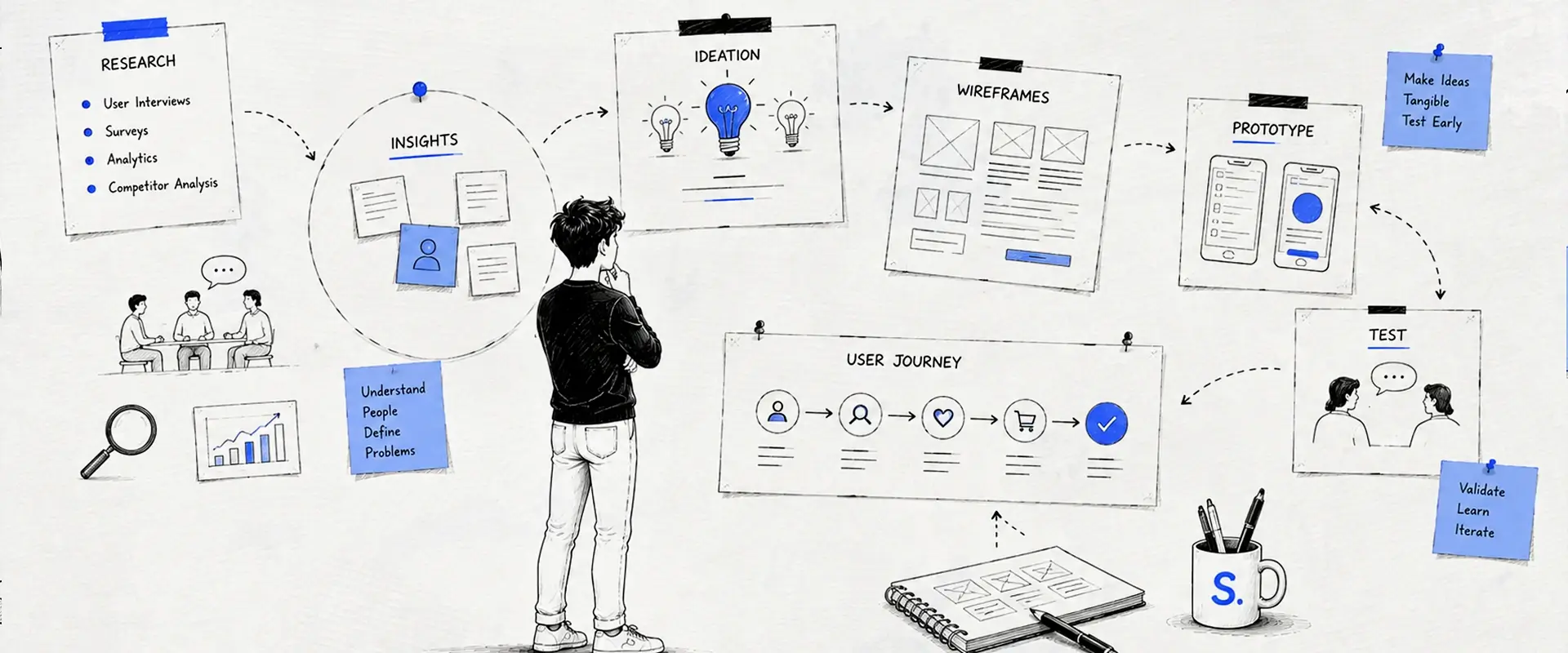
There isn't one universal UX process. The work depends on the product, team, budget, users, and problem being solved. A UX project might involve:
Research
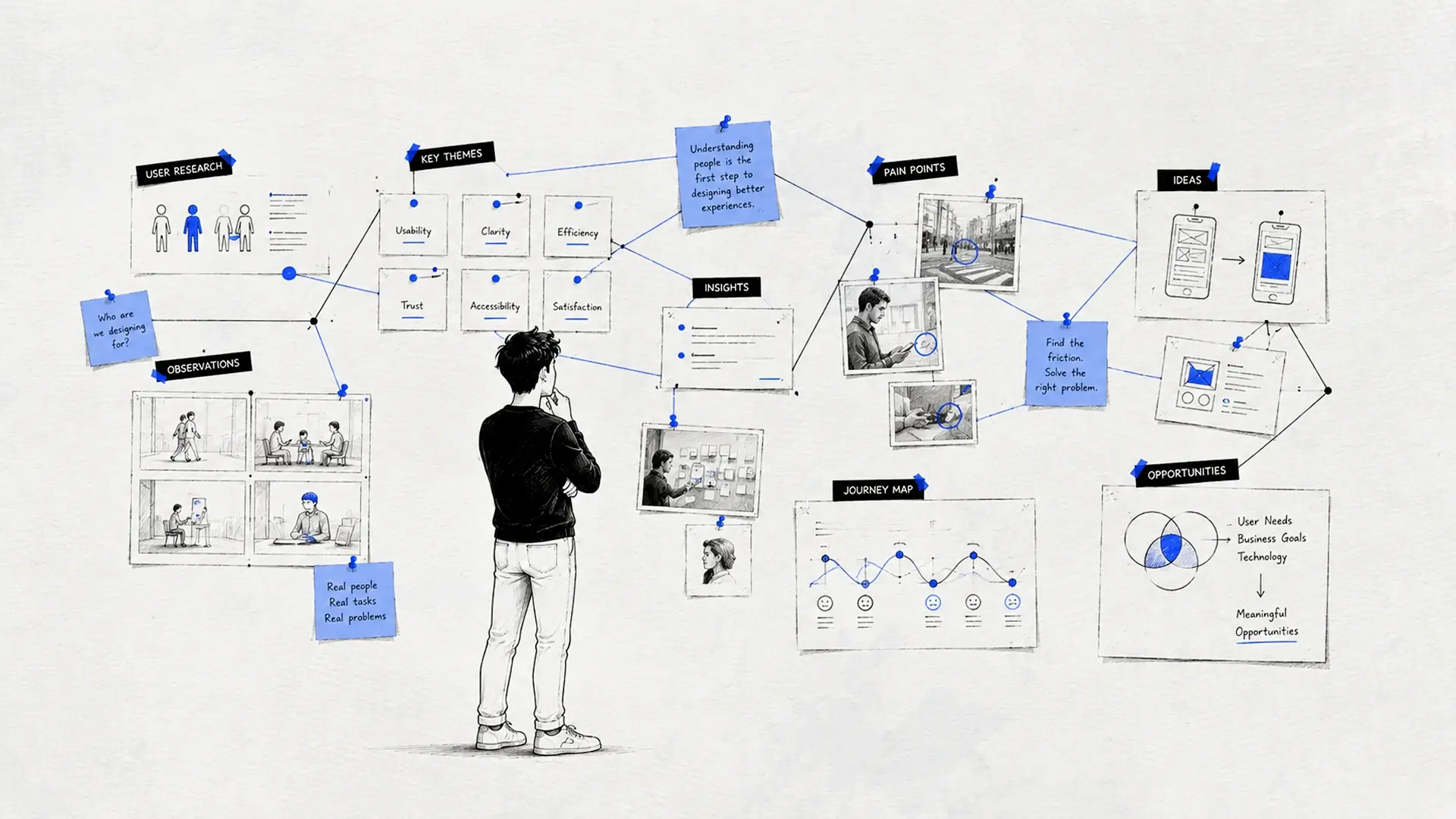
Talking to users, studying behaviour, reviewing existing data, looking at competitors, or understanding where people are struggling.
Information Architecture
Organising content and features so people can understand where they are and where they need to go.
User Flows
Mapping the steps someone takes to complete an important task.
Wireframes
Working through structure and hierarchy before spending time on visual details.
Prototypes
Creating something interactive enough to test an idea before building the final product.
Usability Testing
Watching people use the design and finding places where expectations and reality don't match.
Interface Design
Turning the structure into a clear and usable visual system.
Collaboration
Working with developers and other team members to make sure the final product behaves as intended.
Not every project needs every step. The process should serve the problem, not become a checklist that every project is forced to follow.
Accessibility Is Part of UX
Accessibility shouldn't be something added at the end of a project. If an interface is difficult or impossible for part of its audience to use, that is an experience problem.
Things such as readable contrast, keyboard navigation, clear labels, understandable content, visible focus states, and predictable interactions affect whether people can actually use a digital product.
Accessibility, usability, and inclusive design overlap in many ways. Good UX means thinking beyond the ideal user with the ideal device in the ideal situation.
AI Is Changing the Tools, Not the Fundamental Problem
AI is already changing how digital products are designed and how people interact with them. Designers can use AI to explore ideas, analyse information, generate content, speed up repetitive work, and prototype more quickly.
Products themselves are also becoming less predictable. Traditional interfaces usually give users a defined set of actions. AI systems can produce different results from the same interface depending on the user's input, context, and previous interactions.
That creates new UX questions. How does the user know what the system can do? How much control should they have? How should uncertainty be communicated? What happens when the AI is wrong? Can the user understand why something happened? How easy is it to correct the system?
These are new versions of an old UX problem: helping people understand what a system is doing.
The Tools Will Keep Changing
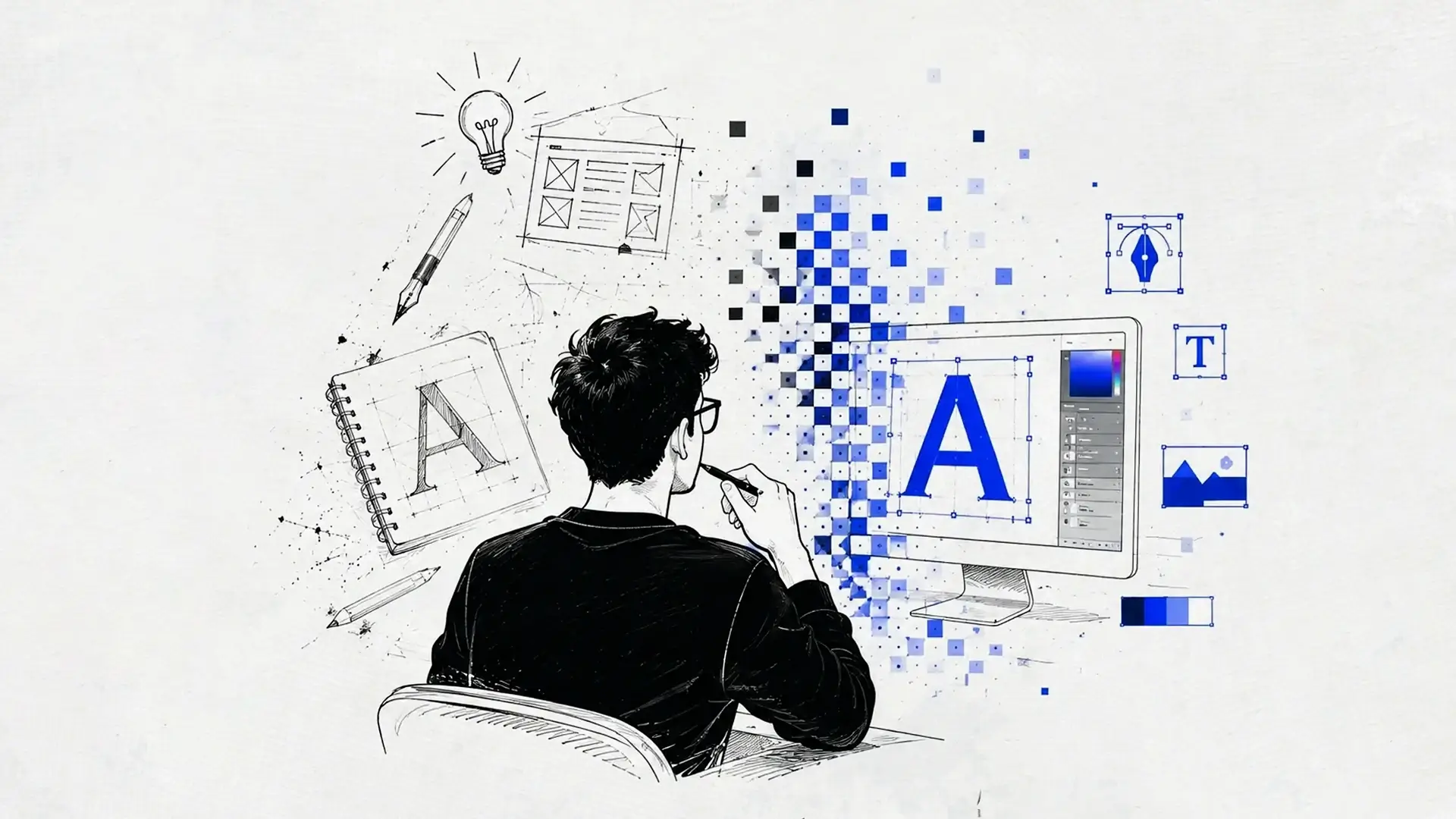
UX designers have already worked through many generations of tools. Paper sketches became digital wireframes. Static mockups became interactive prototypes. Desktop software moved toward collaborative browser-based tools.
Now AI is becoming part of both the design process and the products being designed. The individual tools will continue to change.
Knowing one piece of software is useful, but it isn't the same as understanding UX. A tool can help you draw an interface. It can't automatically tell you whether you've understood the right problem.
What Hasn't Changed
Looking at the history of UX, the most interesting part isn't how much has changed. It's how much hasn't.
People still want to know where they are. They still want to understand what will happen when they take an action. They still make mistakes. They still become frustrated when a system behaves in a way they don't expect.
They still bring habits and expectations from other products into new ones. And designers still have to understand those people before making decisions for them.
The technology changes. The screens change. The tools change.
The responsibility remains remarkably similar:
Understand the person using the system, remove unnecessary friction, and make the next step clear.
That, more than any particular tool or trend, is what UX design is about.