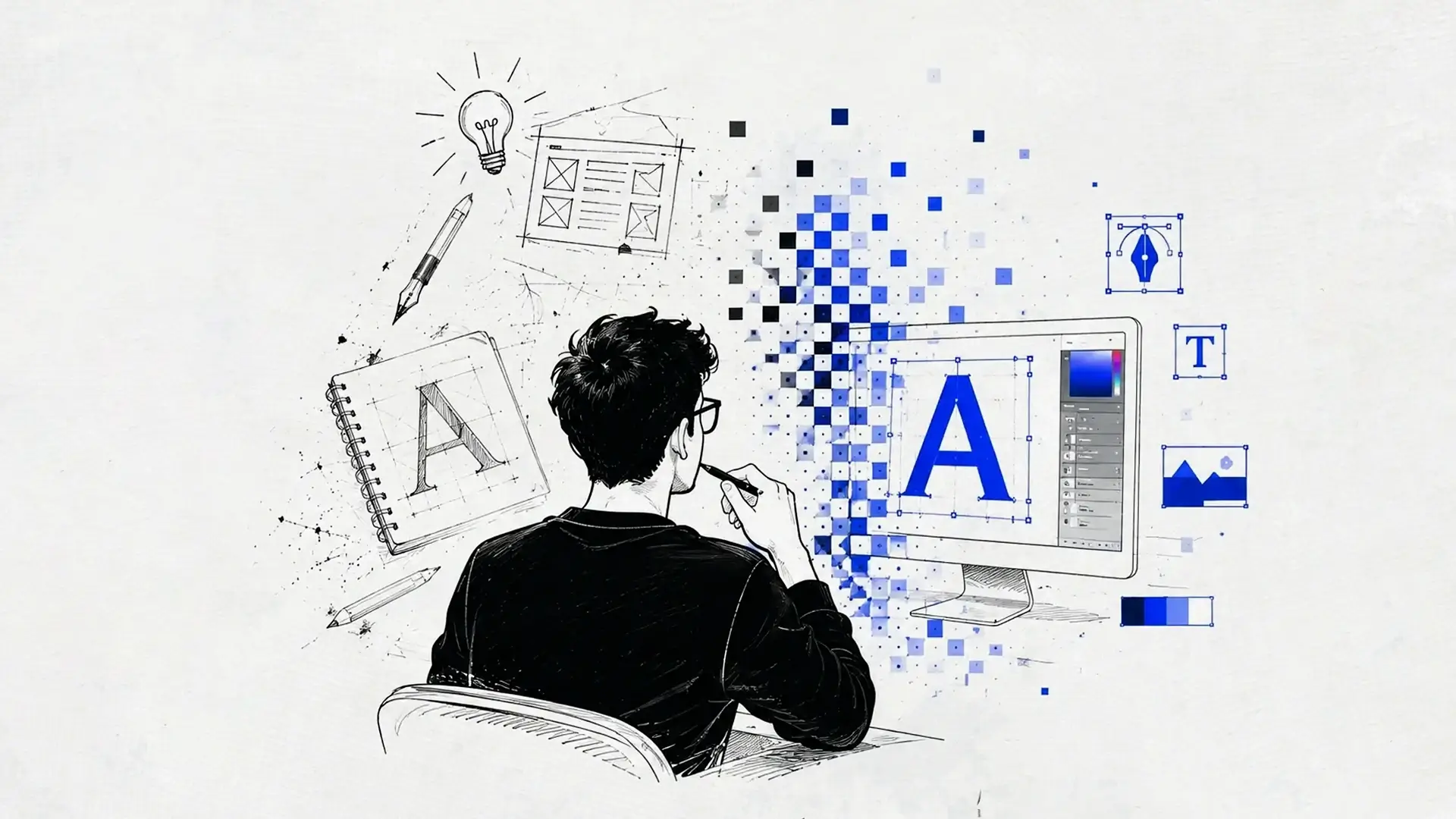
Graphic design has changed a lot since the days of working mainly with paper, ink, photography, and physical production. The tools are different, the places where design appears are different, and the role of the designer has expanded along with them.
But the basic job is still familiar: take an idea, understand what needs to be communicated, and find the clearest visual way to express it.
The Shift Wasn't One Big Moment
Graphic design didn't suddenly become digital. The change happened gradually as new tools entered the process and replaced parts of traditional production.
For a long time, creating printed work involved several people and several stages. Type had to be set, images prepared, layouts assembled, and artwork made ready for production. Designers were closely connected to the physical process of making the final piece.
As personal computers and design software became more capable, more of that work moved onto a single screen. Designers could experiment, make changes, and prepare finished artwork without relying on the same long production chain.
Desktop Publishing Changed the Workflow
The rise of desktop publishing in the 1980s and 1990s changed everyday design work dramatically. Tasks that once required specialist equipment could increasingly be handled by one designer using a computer.
Typography, page layout, image editing, illustration, and print preparation started becoming part of the same digital workflow.
This didn't remove the need for traditional design knowledge. If anything, it made that knowledge more important. Having more control over type, images, and layout also meant having more decisions to make.
Then the Canvas Started Moving
Print gives you a fixed canvas. A poster has a size. A book has pages. A package has physical dimensions.
The web changed that.
Designers suddenly had to think about screens of different sizes, changing content, hyperlinks, navigation, loading speed, browser behaviour, and interaction. The final design was no longer a static object. People could click it, scroll through it, search it, and sometimes break it.
That changed the way designers had to think. A page wasn't just something to look at anymore. It was something people had to use.
Mobile Made Flexibility Necessary
Smartphones pushed that change even further. A design that worked on a large desktop screen also had to make sense on something that could fit in a person's hand.
Layouts became responsive. Navigation changed. Content had to be prioritised more carefully. Buttons needed to work with fingers instead of a mouse pointer.
Designers could no longer control one exact viewing experience. Designers had to create systems that could adapt.
That idea now feels normal, but it changed the relationship between graphic design and digital design in a big way.
Branding Became More Than a Logo
Brands changed with the same technology.
A visual identity once needed to work across things like stationery, signage, packaging, advertising, and print. Those things still matter, but now the same identity may also need to work across a website, mobile interface, social media, video, digital advertising, presentations, email, and sometimes 3D environments.
This is why I think about brand identity as a system rather than a collection of individual graphics.
A logo matters, but consistency comes from everything around it: typography, color, imagery, layout, motion, tone, spacing, and the rules that keep those elements connected.
Graphic Design Started Overlapping With UI and UX
As more communication moved onto screens, the line between graphic design and interface design became less clear.
Typography, color, hierarchy, composition, and visual rhythm still matter, but digital products introduce another question: how does someone actually use this?
A beautiful interface that makes simple tasks difficult isn't doing its job.
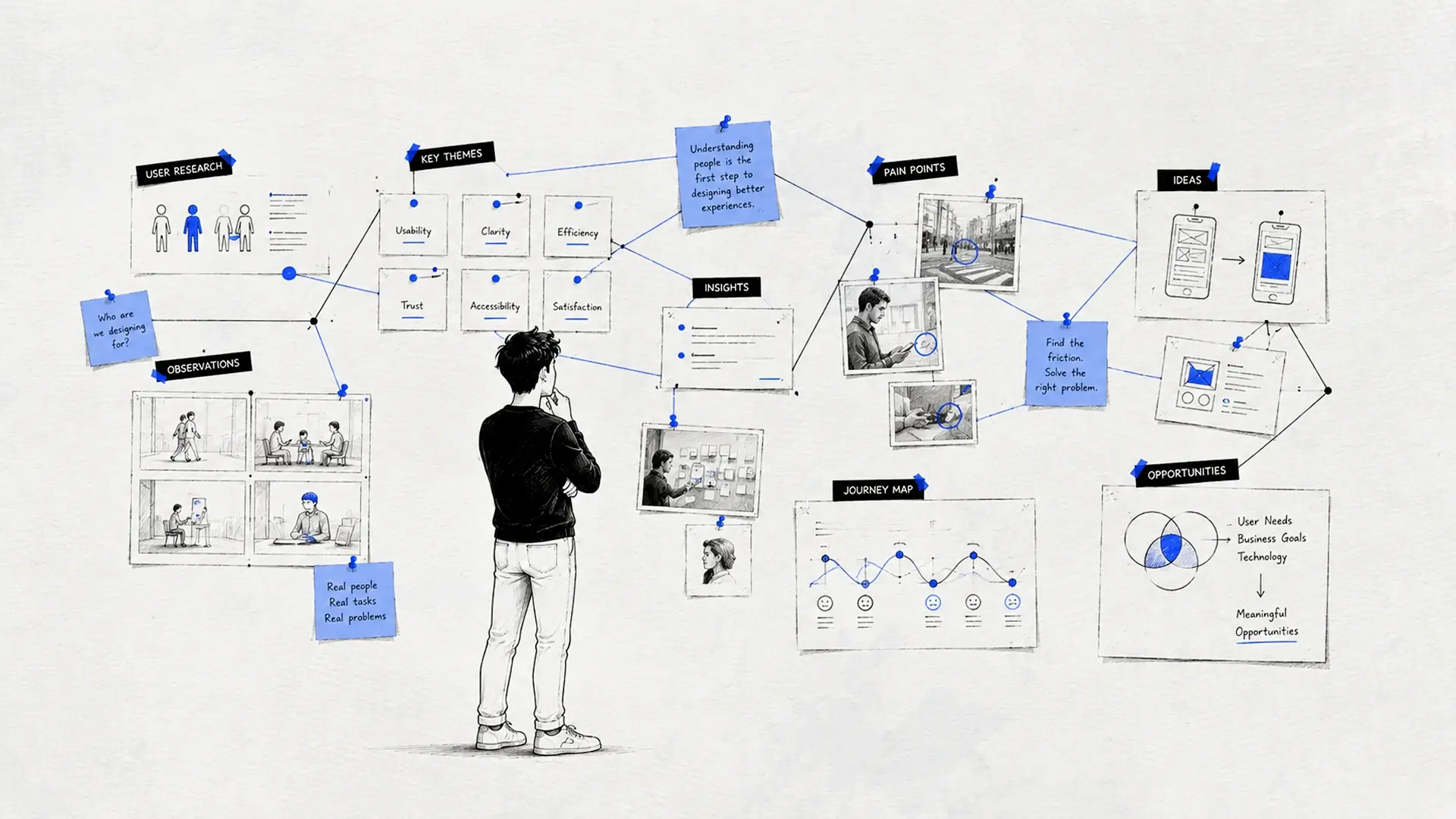
This brought graphic designers closer to ideas from UI and UX design: user flows, information architecture, accessibility, interaction patterns, responsive behaviour, and usability testing.
For me, that overlap is one of the most interesting parts of working digitally. Visual design gets someone's attention, but structure and usability determine whether the experience keeps working after that first impression.
The Designer's Toolkit Got Bigger
The number of tools available to designers today is difficult to compare with what existed a few decades ago.
Designers can work with vector graphics, photography, video, motion, interactive prototypes, websites, 3D environments, and real-time experiences from the same computer.
Tools such as Figma have made interface design and collaboration faster. WordPress and Framer make it possible to move from design into a working website without treating design and development as completely separate stages. 3D software gives designers another way to present products, spaces, and ideas that are difficult to communicate with flat images alone.
Each new tool adds possibilities, but learning more software doesn't automatically make the work better.
The tool helps you make the thing. It doesn't decide whether the thing should exist or whether the idea behind it makes sense.
Design Is More Collaborative Now
Digital work also changed who designers work with.
A designer might collaborate with developers, marketers, writers, researchers, product managers, 3D artists, or business owners during the same project.
That means design decisions rarely happen in isolation.
A developer may point out a technical limitation. A user test may show that a layout isn't as obvious as it seemed. A business requirement may change the hierarchy of a page. Content may force the design to adapt.
Sometimes that makes the process messier, but it also makes the final result more realistic.
AI Is the Latest Addition, Not the End of Design
AI is another major change in the designer's toolkit.
It can help generate ideas, explore visual directions, create variations, work through repetitive tasks, organise information, and speed up parts of the production process.
That is useful, but it doesn't remove the need to make decisions.
Someone still has to decide what fits the brand, what communicates the right idea, what should be removed, what feels generic, what is accessible, and what actually solves the problem.
In some ways, AI makes judgement more important because producing options is becoming easier. Choosing the right option is still the difficult part.
Some Things Haven't Changed
The tools around graphic design have changed completely, but many of the fundamentals haven't.
Typography still needs hierarchy. Color still needs purpose. Composition still affects where the eye goes first. A message still needs to be understood. A brand still needs consistency.
And designers still need to understand who they're designing for.
That's probably the biggest lesson from moving from pen to pixel. Technology keeps changing how design is produced, but it doesn’t remove the need to think before creating.
The screen is different from the page. The software is different from the pencil. AI is different from both.
But the question underneath the work is still the same:
What am I trying to communicate, and how can I make it clear?